
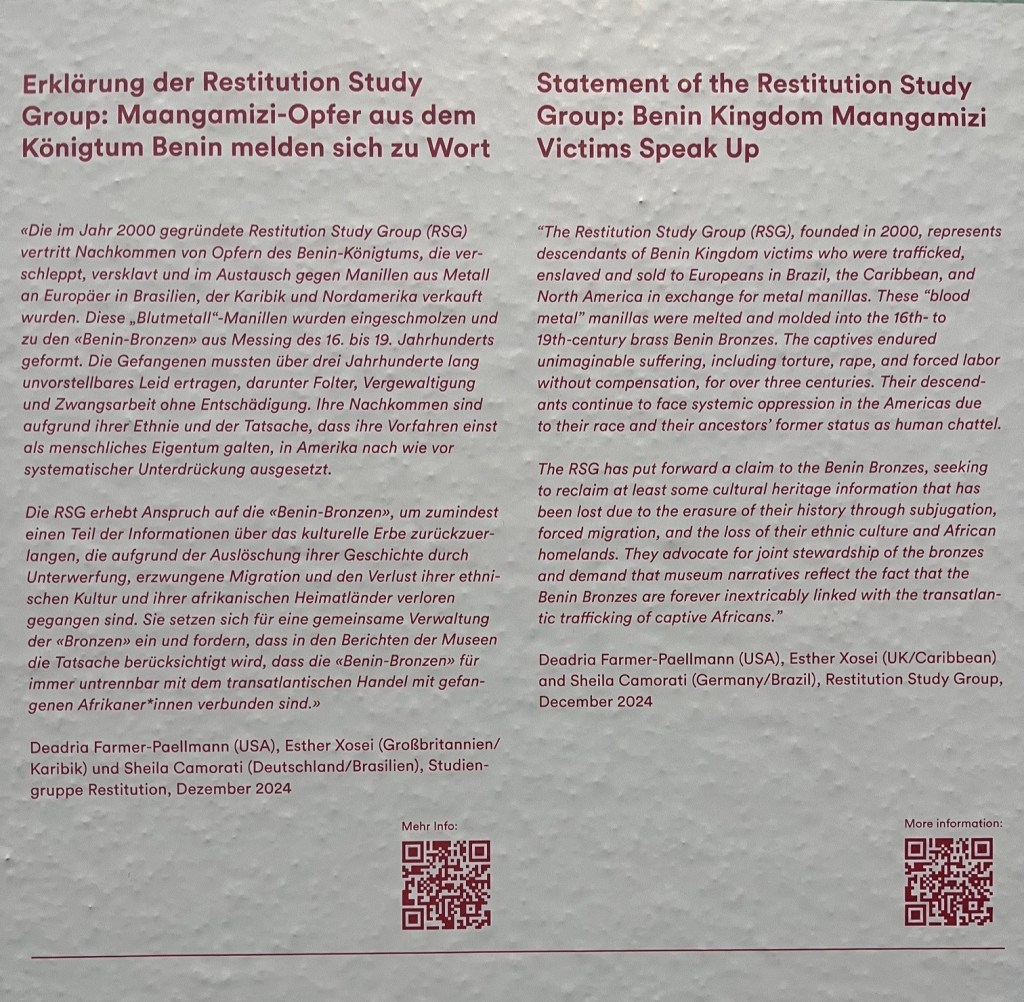

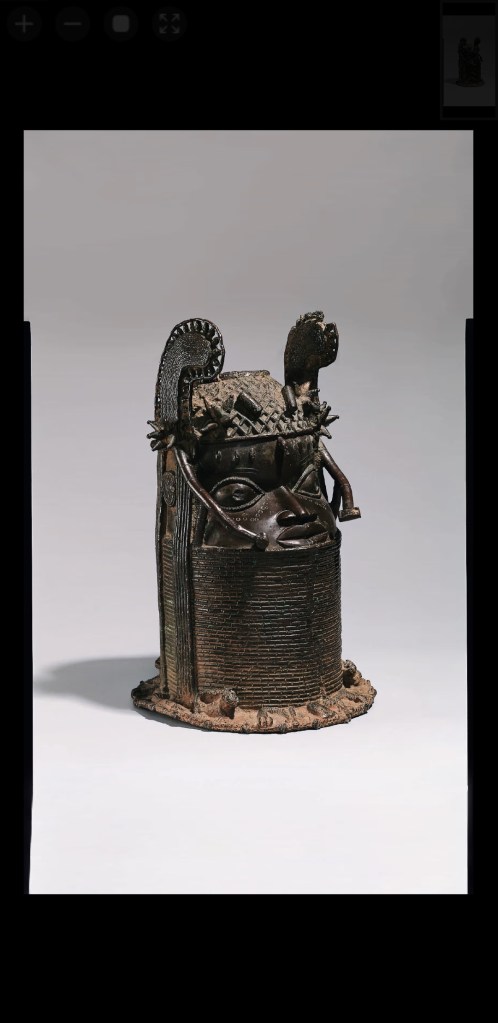

ZÜRICH, Switzerland — In a groundbreaking development for cultural heritage dialogue, Museum Rietberg has expanded its Benin Bronzes exhibition to include crucial perspectives from the Restitution Study Group (RSG), marking a significant step toward the inclusive stewardship of these historic artifacts. The exhibition, which concludes on February 16, 2025, now features a dedicated panel highlighting the often-overlooked connection between the Benin Bronzes and the transatlantic slave trade and link to the award winning film, “They Belong to All of Us — The Benin Bronze Slave Trade Story.”
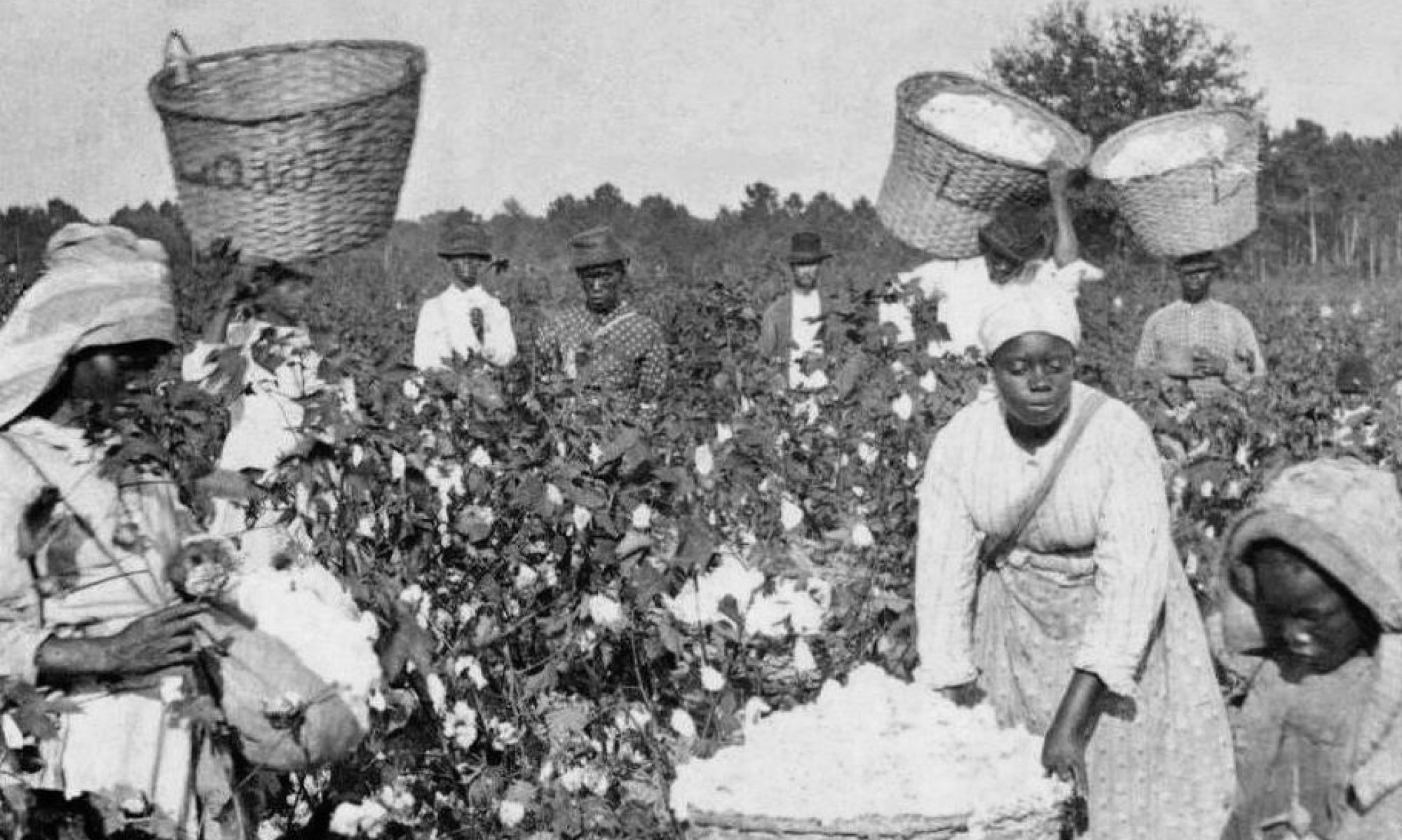
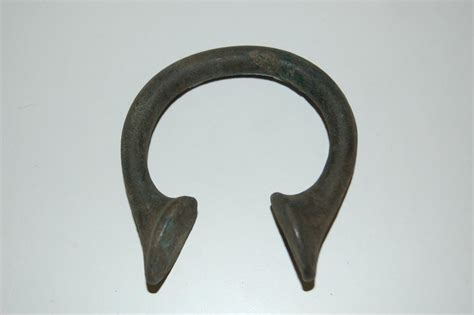
This historic breakthrough follows the powerful advocacy of RSG Executive Director Deadria Farmer-Paellmann at a Rietberg event in October. Despite not being officially invited to speak at the conference—which included representatives from Nigeria and the Benin Royal Family—Farmer-Paellmann seized the opportunity to address the audience, calling attention to the exclusion of Afrodescendant voices and underscoring the slave trade origins of the artifacts by presenting a manilla, a form of currency used in the transatlantic slave trade. Manillas were melted and molded into the 16th to 19th century Benin bronzes.
Her intervention led to an immediate two-hour meeting between the Nigerian Director-General of the National Commission for Museums and Monuments (NCMM), the RSG, and Swiss Edo representatives—marking the NCMM’s first engagement with the RSG after two years of outreach efforts.
“Museum Rietberg’s decision to include our perspective is a crucial first step in acknowledging the full historical context of these artifacts,” said Farmer-Paellmann. “We believe this model of inclusive dialogue and representation should be adopted by all institutions displaying Benin Bronzes.”
“It was critical to name the crime Maangamizi on the panel, rather than merely referring to it as transatlantic enslavement, to convey the intentionality of the torture, ethnocide, forced migration, uncompensated servitude, and oppression inflicted upon our ancestors and us,” said Esther Xosei, RSG Caribbean/UK Mobilizer.
“The 10,000 Benin bronzes circulating globally, valued at $30 billion in total, are central to both Edo and Afrodescendant heritage; therefore, we must all have a voice in the narrative and stewardship,” added Sheila Camorati, RSG Brazil/EU Mobilizer.
The RSG has proposed an innovative joint stewardship model that benefits all stakeholders, including support for a global Benin Kingdom Museum franchise. This sustainable development initiative involves sharing 3D scans and circulating duplicate bronzes, enabling Afrodescendants to tell the complete Benin Bronzes story—from the slave trade manillas to contemporary resilience.
A cornerstone of this initiative is the newly launched Benin Kingdom Museum Bronze-Making Fellowship, which currently trains five fellows representing the global Afrodescendant community from Jamaica, Haiti, Brazil, and the United States. These artisans are learning both traditional lost-wax casting methods and modern 3D scanning techniques to create authentic replicas of the bronzes.
The RSG continues to advocate for expanded dialogue with Nigerian authorities and other stakeholders to ensure that all voices are heard in determining the future of these significant cultural artifacts.
 Restitution Study Group