
FOR IMMEDIATE RELEASE
Black Group Brings Benin Bronze Case Against Smithsonian to US Supreme Court
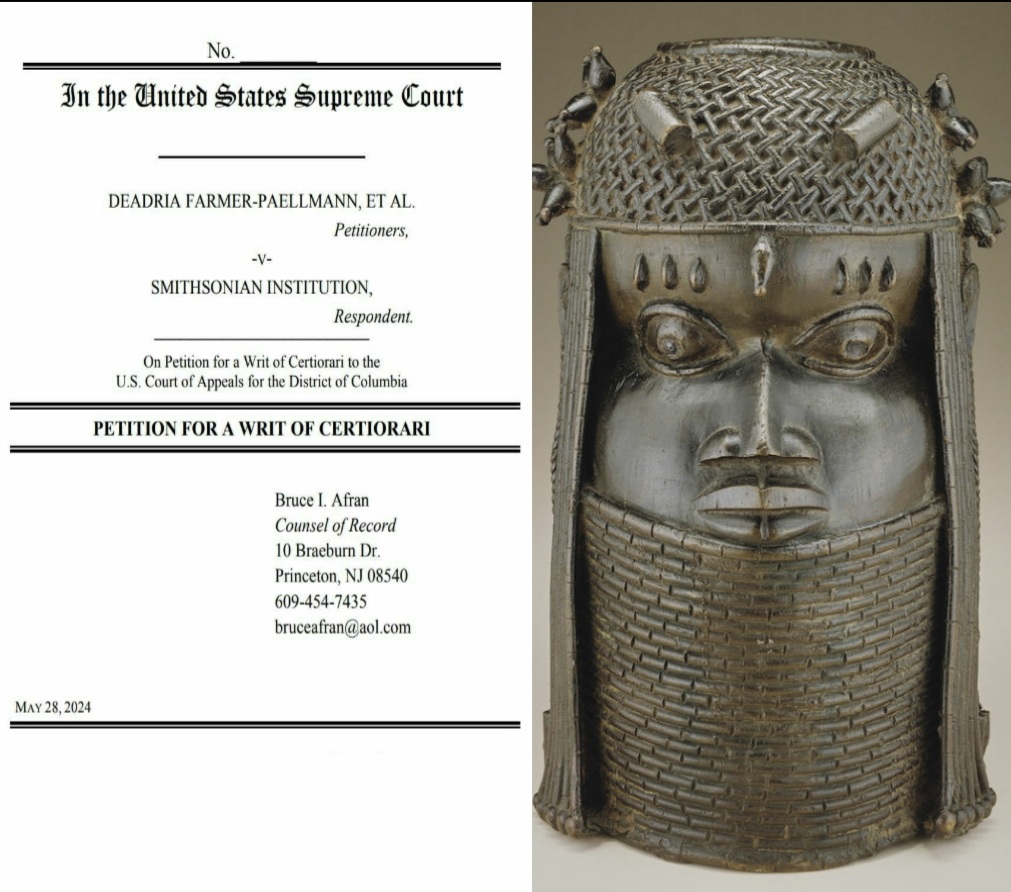
On May 28, 2024, the Restitution Study Group, Inc., a New York based reparatory justice organization led by Deadria Farmer-Paellmann, officially filed a petition for a writ of certiorari with the United States Supreme Court in Washington, DC. The petition seeks to address significant legal questions surrounding the Smithsonian Institution’s recent actions regarding the repatriation of the Benin Bronzes.
“This case challenges the power of the Smithsonian to independently create its own art repatriation policy without even a public hearing or Congressional approval. We are asking the U.S. Supreme Court to decide if the Smithsonian has unilateral and arbitrary power to give America’s art and science collection to foreign countries even where large numbers of Americans, such as U.S. descendant of enslaved people, claim a close and intimate connection with the art objects,” said Bruce Afran, attorney for the petitioners.
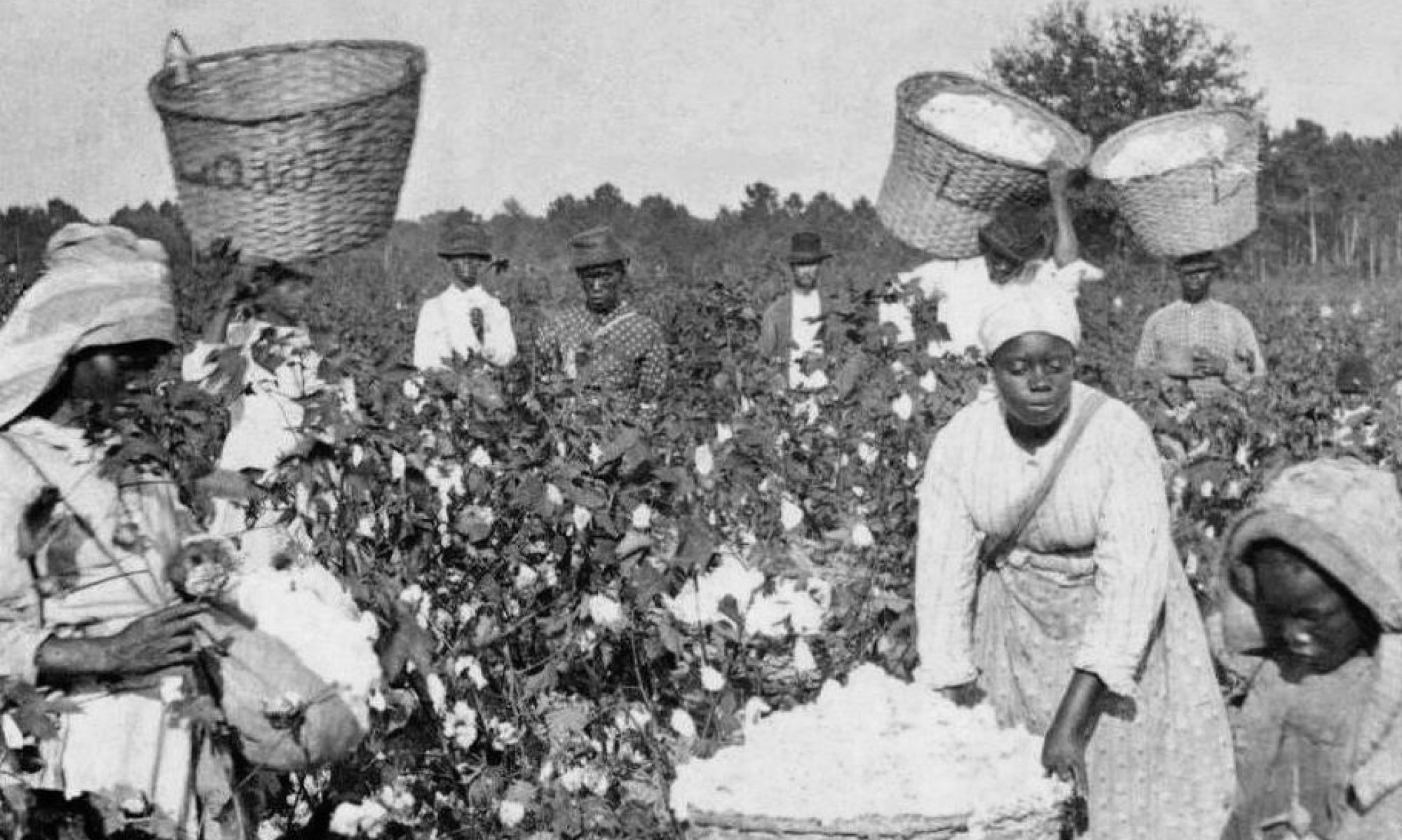
The bronzes are ancient relics from a collection of as many as 10,000 made with metal manilla ingots paid to Benin Kingdom slave traders in exchange for the ancestors of Farmer-Paellmann and other descendants of enslaved Africans. DNA links Farmer-Paellmann and others represented in the case to Benin kingdom princes and nobles.
The petition raises three pivotal questions:
1. Jurisdiction Over Repatriation: Whether the Smithsonian Institution’s repatriation of artworks to foreign states under an Ethical Return policy without following the rulemaking and public hearing processes mandated by the Administrative Procedure Act (APA) is within the subject matter jurisdiction of the courts.
2. Standing of Descendants of Enslaved Africans: Whether descendants of enslaved Africans in the United States have Article III standing to challenge the Smithsonian’s repatriation of 29 Benin Bronzes, which were created from metal manilla ingots used by Western slave traders in the purchase of enslaved persons from the Kingdom of Benin.
3. Mootness of the Case: Whether the lower courts erred in declaring the case moot given that nine of the Benin Bronzes have had their title transferred to Nigeria but remain in the United States on long-term loan, along with other Bronzes still under U.S. title but potentially subject to future repatriation.
The Restitution Study Group argues that these actions by the Smithsonian Institution bypass the necessary legal frameworks and fail to consider the historical and cultural significance these artifacts hold for the descendants of enslaved Africans.
“We need permanent access to these relics because we were sold away from our African homelands, culture, and customs — these bronzes are our link to learning who we are. They are the embodiment of our enslaved ancestors,” said Farmer-Paellmann.
This petition is a critical step in ensuring that repatriation policies are conducted transparently and legally, respecting both historical context, full provenance and the rights of affected communities.
The Restitution Study Group is in ongoing discussions with a number of other stakeholder institutions in the US, UK and Germany about their respective Benin Bronzes.
“This case speaks to our struggle globally to retain access to our cultural heritage as we Benin kingdom peoples are not just in Nigeria, and were not just held as chattel in the United States, but in the Caribbean as well as South and Central America too. We all stand together in support of the Restitution Study Group in this case,” said Esther Xosei, UK based reparationist and coordinator-general of the Stop the Maangamizi Campaign.
“My ancestors were the first sold by the Benin kingdom to the Portuguese for the bronze metal in the 1500’s and the last in 1888. There is no ethical return policy until our voices are heard on this matter,” says Sheila Camorati of Brazil, a descendant of Benin kingdom captives residing in Germany and working in collaboration with the Restitution Study Group.
For further information or to schedule an interview with Deadria Farmer-Paellmann, Esther Xosei, Sheila Camaroti or legal counsel Bruce Afran, please contact Bruce Afran at 609-454-7435 or via email at bruceafran@aol.com.
SLAVERY REPARATIONS LAWSUIT

Farmer-Paellmann v. FleetBoston – On March 26, 2002, the first of a series of cases were filed by descendants of enslaved Africans against corporations complicit in antebelum slavery. Claims included human rights and consumer fraud allegations. It was dismissed with prejudice in United States District Court on July 6, 2005, but reversed on appeal by the United States Court of Appeals, Seventh Circuit, on December 13, 2006.
Consumer Fraud arguments were permitted to move forward as the Court held that:
“plaintiffs are charging the defendants with misrepresenting their activities in relation to slavery. A seller who learns that some class of buyers would not buy his product if they knew it contained some component that he would normally have no duty to disclose, but fearing to lose those buyers falsely represents that the product does not contain the component, is guilty of fraud.”
The Consumer Fraud claims made in the case were recognized as viable alternatives to human rights arguments in:
Harvard Civil Rights – Civil Liberties Law Review: Vol. 42, No. 2, Summer 2007: Judicial Recognition of the Harms of Slavery: Consumer Fraud as an Alternative to Reparations. http://harvardcrcl.org/volumes-40-through-present/
Unfortunately, resources for pursuing a consumer fraud trial were not available.
On May 22, 2007, the Supreme Court of the United States docketed a petition filed by Deadria Farmer-Paellmann asking the Court to hear a case against the defendants. At issue was whether statues of limitations should be tolled to permit slave descendants to bring the human rights actions. The Court did not grant a petition for certiori.
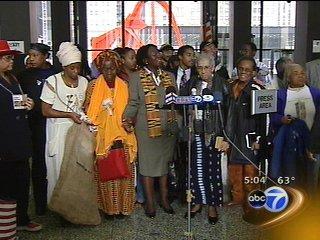
Plaintiffs at oral argument for appeal of reparations cases in Seventh Circuit Court of Appeals — In Re African American Slave Descendants, C-SPAN video/oral argument.
GENOCIDE COMPENSATION LAWSUIT
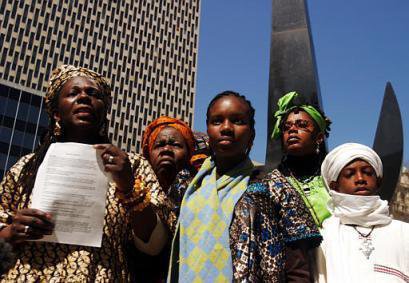
Plaintiffs filing genocide compensation lawsuit based on UN Genocide Convention codified in the United States as the Proxmire Act using African Ancestry DNA test results and TransAtlantic Slave Trade Database research. Case was subsequently withdrawn for future filing.
 Restitution Study Group