
Restitution Study Group | September 2026
Movements do more than change laws, policies and institutions. They can change the questions scholars ask.
For decades, the contemporary restitution debate surrounding the Benin Bronzes was framed primarily as a dispute between Western institutions holding objects taken during Britain’s 1897 invasion of Benin and Nigerian or Benin Kingdom authorities seeking their return. The Restitution Study Group (RSG) introduced another question into that discussion: What rights do descendants of Africans forcibly removed from the continent through transatlantic human trafficking retain in African cultural heritage?
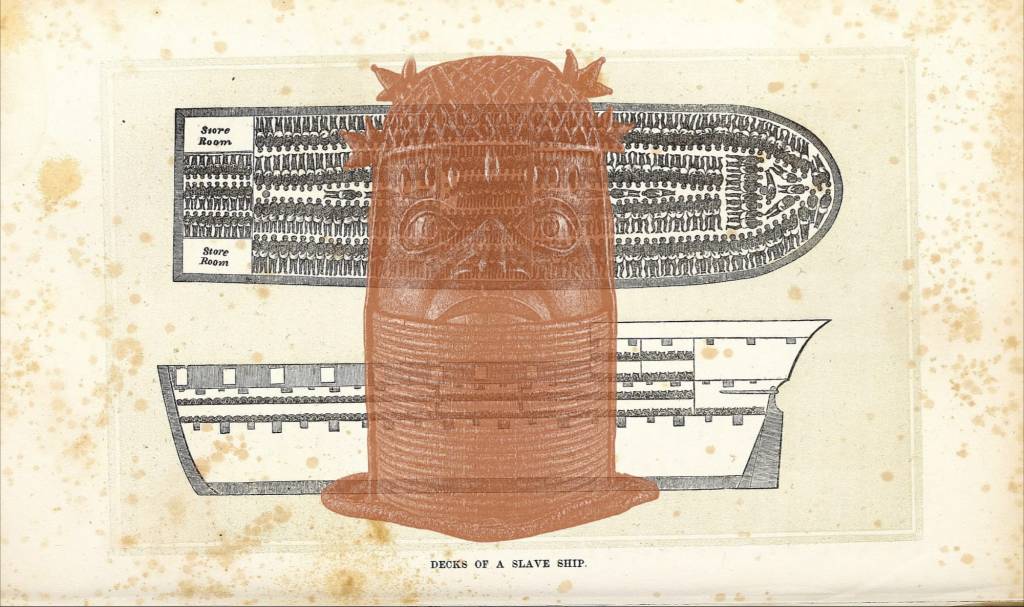
RSG’s intervention raises two related issues. First, manillas—the metal currency closely connected to Atlantic commerce in enslaved Africans—were melted down and used in the production of Benin artworks. Second, the African descendants now living throughout the Americas did not simply migrate away from the continent. Their ancestors were forcibly transported away from their homelands, separating generations from African land, languages, institutions, communities and cultural heritage.
That raises a fundamental question for restitution theory: Can geographic separation from Africa be used to diminish a cultural claim when that separation was itself produced by forced trafficking?
The Benin Bronzes make the problem still more difficult. What cultural or ethical interests arise when the ancestors of one population were exchanged within the commercial system that supplied material used to create objects that later became enormously valuable cultural treasures? Should descendants of those Africans have a voice in determining what happens to such objects? And what ethical obligations arise when restitution transfers objects exclusively to a present-day state or hereditary authority associated with a historical polity that participated in the trade that helped produce the African diaspora?
Scholars need not agree with RSG’s legal arguments or its proposals for co-ownership and shared stewardship for the intervention to have scholarly significance. Indeed, disagreement is part of that significance. What matters is that questions concerning slavery, forced displacement, diasporic cultural rights and competing Black claims to African heritage are increasingly entering scholarship that once tended to frame restitution primarily as a relationship between Western museums and African source nations. Cresa Pugh describes precisely this shift, observing that most scholarship has traditionally framed restitution around Western museums and postcolonial states while RSG’s intervention brings unresolved slavery and diaspora claims into view.
The following is a selected, not exhaustive, bibliography for students, scholars, museum professionals and others interested in this developing area of research. It includes peer-reviewed scholarship, academic book chapters, a doctoral thesis, and scholarly or law-school commentary; the publication types are therefore not all equivalent.
- Imadé Aigbobo. “Sa-e-y-ama oder Erinnerungen in Bronze gießen: Eine kritische Betrachtung der Restitution der Benin Bronzen.” Augsburger Volkskundliche Nachrichten 29, no. 53 (2023): 244–272.
Aigbobo examines RSG’s intervention within a broader critique of the German restitution process. The article discusses Deadria Farmer-Paellmann, manillas, the slave-trade history of the Benin Kingdom and RSG’s contention that descendants of enslaved Africans have interests that restitution negotiations had failed to address. Aigbobo disagrees with stopping restitution, but considers the underlying intervention legitimate because that history had been omitted from negotiations.
Selected excerpt: “Die Einwände der ‘Restitution Study Group’ sind berechtigt” — the objections of the Restitution Study Group are justified.
Full text:
https://opus.bibliothek.uni-augsburg.de/opus4/files/112703/112703.pdf
- Lorenzo Huskamp. “The Benin Bronzes and the Dialectics of Restitution: An Essay on the Use of Moral Judgement, the Notion of Guilt and Relational Ethics in the Recent Debate on Restitution.” Leuphana University of Lüneburg, March 2023.
This student academic essay/preprint is notable because RSG is not simply mentioned in a footnote: analyzing RSG’s intervention is one of the paper’s stated purposes. Huskamp examines RSG’s moral reasoning concerning historical responsibility, enslavement and the Bronzes and ultimately argues for a different ethical framework.
Selected excerpt: the author sets out to “analyse the main line of argumentation presented by the Restitution Study Group and its Executive Director Deadria Farmer-Paellmann.”
DOI: 10.13140/RG.2.2.30310.60481
- Carsten Stahn. “Beyond to Return or Not to Return: Towards Relational Cultural Justice.” In Confronting Colonial Objects: Histories, Legalities, and Access to Culture, 478–536. Oxford University Press, 2023.
Stahn discusses RSG’s 2022 Smithsonian litigation as an example of conflicts that may arise when one historical injustice is invoked in a restitution process intended to repair another. He describes RSG’s argument concerning the Benin Kingdom, slavery, manillas and descendants’ access, but disagrees with the way RSG balances those competing claims.
Selected excerpt: Stahn argues that the claim “plays different types of coloniality against each other.”
Chapter DOI: 10.1093/oso/9780192868121.003.0009
Full chapter:
https://academic.oup.com/book/51727/chapter/419842491
- Meghan Bill. “If, When, and To Whom? Returning the Benin Bronzes.” Fordham Intellectual Property, Media & Entertainment Law Journal, February 28, 2024.
Bill examines competing claims to ownership after the return of Benin objects became widespread. She discusses Farmer-Paellmann, RSG’s Smithsonian litigation, the equitable-ownership claim and the argument that a simple Nigeria-versus-Western-museum framework does not capture every asserted interest in the objects.
Selected excerpt: RSG and Farmer-Paellmann “assert moral claims to Benin Kingdom works made from the profits of slave trading.”
Full article:
https://fordhamiplj.org/2024/02/28/if-when-and-to-whom-returning-the-benin-bronzes/
- Memory Biwa and Bénédicte Savoy, with Mahret Ifeoma Kupka and Irene V. Small. “Restitution and Resonances.” Texte zur Kunst, no. 133 (2024).
This scholarly roundtable is particularly significant to RSG’s visual as well as intellectual impact. Princeton art historian Irene V. Small introduces RSG and Farmer-Paellmann’s argument concerning manillas, human commodification, financial value and diasporic claims. The publication also reproduces a still from RSG and USAVIOR’s film They Belong to All of Us.
Selected excerpt: “there is a literal relation between these objects and financial value.”
The discussion then goes further. Bénédicte Savoy characterizes RSG’s intervention—alongside competing Nigerian claims—as part of restitution itself, because cultural heritage includes the debate over who possesses it, where it belongs and who should decide.
- Christopher C. Fennell. “African Diaspora Heritage in the Americas.” In Routledge Handbook of Critical African Heritage Studies, edited by Ashton Sinamai, John D. Giblin, Shadreck Chirikure and Ishanlosen Odiaua, 160–173. London: Routledge, 2024.
Fennell situates RSG’s challenge within the larger subject of African-diaspora heritage and reparative justice. The chapter is especially relevant because RSG appears within scholarship whose central subject is what African descendants in the Americas retained, transformed and claimed as heritage following forced displacement.
Selected excerpt: RSG argued that descendants “should see those statues retained by the Smithsonian as part of their own heritage.”
DOI: 10.4324/9781003025832-14
Publication record:
https://experts.illinois.edu/en/publications/african-diaspora-heritage-in-the-americas/
- Sophia Do. “The End of the Indiana Jones Era and the New Age of Repatriation: The Museums’ Balance Between Ethics and Exhibition.” University of Miami International & Comparative Law Review, November 18, 2024.
Do’s legal commentary takes RSG’s litigation into a broader conceptual question about national patrimony. Of the works in this bibliography, it perhaps most directly articulates the forced-displacement question RSG has raised: whether geographic removal should sever cultural rights when the people claiming them were historically separated from the territory.
Selected excerpt: “By being physically and historically removed from the ‘state,’ do those ‘state’s people’ lose claim to their cultural heritage?”
- Staffan Lundén. “Distorting History in the Restitution Debate: Dan Hicks’s The Brutish Museums and Fact and Fiction in Benin Historiography.” International Journal of Cultural Property 31, no. 2 (2024): 202–225. Published online December 16, 2024.
Lundén’s peer-reviewed article is primarily a critical examination of historical claims concerning Britain’s 1897 conquest. In his conclusion, however, he identifies slavery and RSG’s challenge as another history relevant to the objects, reinforcing the argument that the Bronzes may embody several overlapping histories of violence rather than a single restitution narrative.
Selected excerpt: “the New York-based Restitution Study Group has protested against the return of these objects to slave trader heirs.”
DOI: 10.1017/S0940739124000225
- Neil Curtis. “125 Years Away from Home: The Return of a Benin Bronze from the University of Aberdeen.” University Museums and Collections Journal 17, no. 1 (2025): 57–69.
Curtis recounts Aberdeen’s return of its Benin commemorative head but does not end the story with the return itself. He introduces RSG’s subsequent challenge concerning manillas, co-ownership and Afrodescendant access, placing that claim directly within professional museum scholarship about restitution.
Selected excerpt: descendants of enslaved people “should therefore have co-ownership of the Benin Bronzes.”
Curtis immediately adds that RSG contends the objects should remain accessible in museums to those descendants, while also expressing concern that museums opposed to restitution could misuse the claim as a reason for delay.
Full journal issue:
https://umac.icom.museum/wp-content/uploads/2025/05/UMACj-17-1-2025-RR.pdf
- Laurence Maidment-Blundell. “‘I Don’t Really Want to Have Hand to Hand Combat with Someone Who I Know Is Right’: How Do Volunteers Contribute and Respond to Museum Decolonisation?” Ph.D. thesis, University College London, 2025.
This doctoral thesis places RSG’s intervention within its Horniman Museum case study. It records the co-ownership petition, the argument concerning the Kingdom of Benin’s role in Atlantic enslavement, the metal used to make the Bronzes, and Afrodescendant access. UCL identifies the work as a 2025 Ph.D. thesis.
Selected excerpt: “their descendants should possess co-ownership of the Bronzes and have access to them.”
UCL record:
https://discovery.ucl.ac.uk/id/eprint/10208727/
Full thesis PDF:
https://discovery.ucl.ac.uk/id/eprint/10208727/9/Maidment-Blundell_10208727_thesis_sigs_removed.pdf
- Cresa Pugh. “Echoes of History: Legacies of the Benin Bronzes and Restitution Within the Black Atlantic.” The Journal of African History 66 (2025): e17, 1–9. Published online October 8, 2025.
Pugh offers the most sustained scholarly examination in this selected bibliography of what RSG’s intervention means for the conceptual framework of restitution itself. An entire section is titled “The Restitution Study Group and Debates on Ownership of the Benin Bronzes.” She situates the Smithsonian dispute within the Black Atlantic and argues that it exposes diaspora claims and histories that a conventional museum-versus-source-nation framework can obscure.
Selected excerpt: “this article shifts the lens to intra-Black debates that complicate inherited frameworks of return.”
Pugh further argues that by challenging the assumption that restitution concerns only source nations and former colonial powers, RSG draws attention to historical African participation in the slave trade and continuing marginalization of diaspora communities.
DOI: 10.1017/S0021853725100637
- Yvonne Liao, Julia T. S. Binter, Olivia Irena Durand and Helena F. S. Lopes. “Port Cities Storytelling: Drawing on Materials of Neglect.” Journal of Global History (2026).
Julia Binter’s section brings RSG’s intervention into global-history scholarship. Rather than treating West African actors as occupying one unchanging historical position, she uses the Bronzes to examine how political elites could participate in Atlantic enslavement during one period and later become victims of European colonial conquest. Material culture becomes a way of examining those shifts over the longue durée.
Selected excerpt: “their position within the Atlantic world shifts from one of perpetrators to victims.”
Editorial note: The article states that RSG sued the Smithsonian in 2020. The cited federal case and other scholarship establish that the complaint was filed in October 2022, so students should not repeat the 2020 date.
From Movement Building to a New Area of Inquiry
This bibliography is not exhaustive. Other scholars have written about these questions, and additional scholarship will certainly follow.
What this selected record already demonstrates, however, is worth pausing to recognize.
RSG began by raising questions that did not fit comfortably within the established framework of Benin Bronze restitution. Those questions were disputed in museums, courts, media, cultural institutions and international forums. They are now being examined in historical scholarship, museum studies, cultural-heritage research, legal scholarship and doctoral work.
That is one measure of movement building.
The larger issue is not simply where an individual Bronze ultimately resides. It is whether Afrodescendants—people whose separation from Africa resulted from forced trafficking rather than voluntary migration—remain stakeholders in African cultural heritage.
It is whether systems of cultural ownership based heavily upon geography and present-day sovereignty adequately account for peoples whose geographic absence was produced by historical violence.
And the Benin Bronzes add another layer: What ethical rights or interests arise when the history of an object connects artistic achievement, European colonial plunder, African participation in Atlantic enslavement, and descendants of the Africans who were trafficked?
RSG has proposed co-ownership, shared stewardship and guaranteed Afrodescendant access as responses. Scholars can challenge those proposals. Some of the scholars above do. Others identify elements of RSG’s intervention that they believe restitution scholarship had previously overlooked.
Either way, the questions have entered the scholarly record.
For students choosing research topics today, much remains unexplored: Who owns cultural heritage after forced displacement? What cultural rights survive generations after a people has been forcibly separated from its ancestral homeland? Who should participate in decisions about objects whose histories cross African sovereignty, Atlantic slavery, colonial conquest and diaspora? And can restitution fully repair one historical dispossession while another population connected to the same objects remains outside the decision-making process?
Those questions were once largely outside the contemporary Benin Bronzes debate.
They are no longer outside it.

